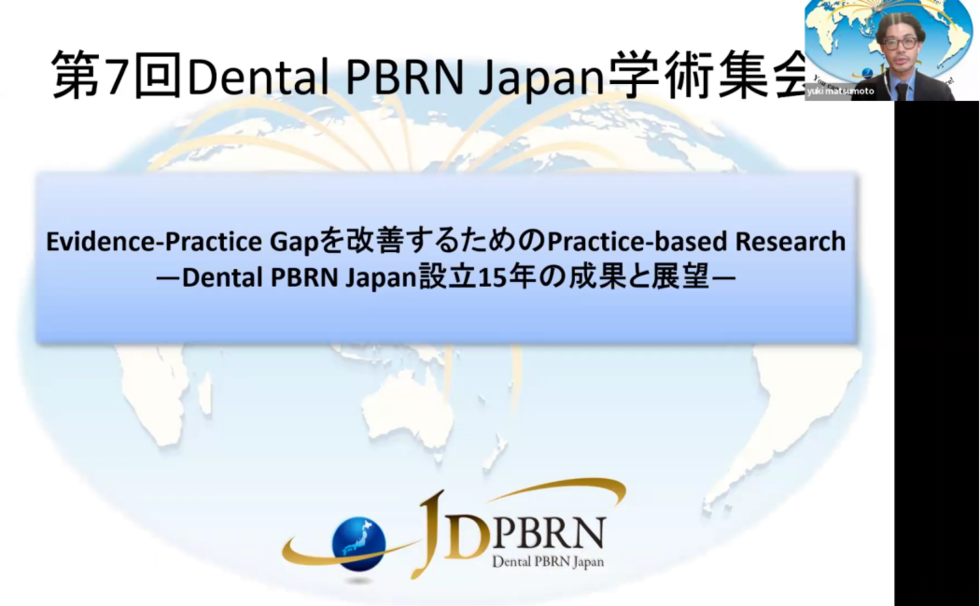
On Sunday, September 21, 2025, the 7th Academic Meeting of the Dental PBRN Japan (JDPBRN) was held virtually. The theme of this meeting was “Practice-based Research to Improve the Evidence-Practice Gap (EPG) – Achievements and Prospects of 15 Years since the Establishment of Dental PBRN Japan,” focused on addressing the persistent gap between clinical evidence and everyday dental practice through practice-based research (PBR). The program featured special online lectures by leading professors from universities in the United States and Brazil, alongside presentations showcasing key research outcomes from JDPBRN’s 15-year history. The meeting concluded with lively discussions on future directions for JDPBRN.
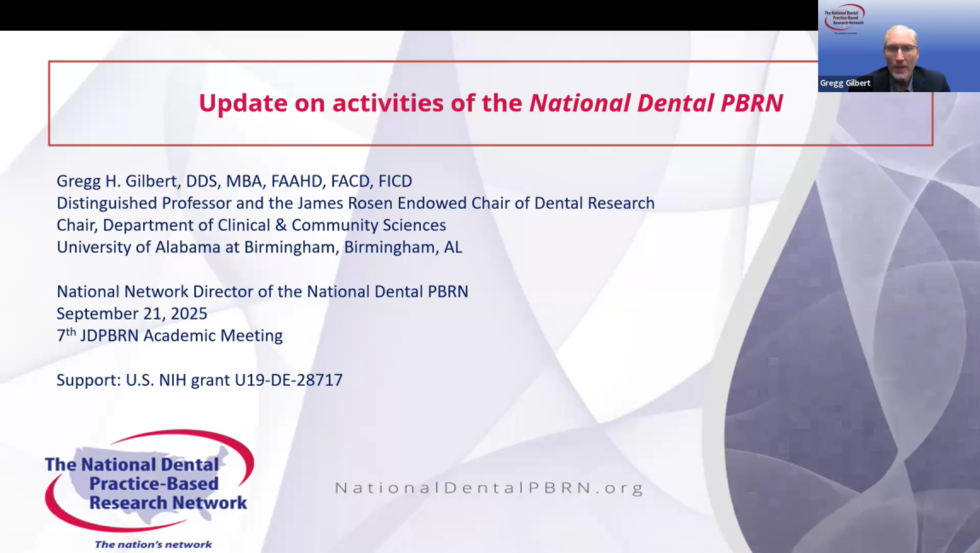
The first special lecture was given by Dr. Gregg H. Gilbert, National Network Director of the U.S. National Dental PBRN and Distinguished Professor at the School of Dentistry, University of Alabama at Birmingham. In his lecture, titled “Update on Activities of the National Dental PBRN,” Dr. Gilbert outlined the mission and significance of PBRNs, highlighted major research achievements from the world’s largest dental PBRN funded by NIH/NIDCR for over two decades, and introduced collaborative efforts with U.S. national clinical organizations. Dr. Gilbert also delivered findings on the concordance between evidence and clinical practice in the U.S., and shared insights into behavioral changes among PBRN participants.
The second special lecture was given by Dr. Valeria V. Gordan, Director of the South Atlantic Region of the U.S. National Dental PBRN and Distinguished Professor at the University of Florida College of Dentistry. In her lecture, titled “International Dental PBRN Activities,” Dr. Gordan introduced a series of research activities originating from her clinical questions regarding the treatment of defective restorations, beginning with basic research and evolving into PBR. Based on these findings, she presented specific examples of the EPG in the U.S. and explained the role of PBRNs in bridging this gap. Dr. Gordan also shared updates on the establishment and current activities of international PBRNs.
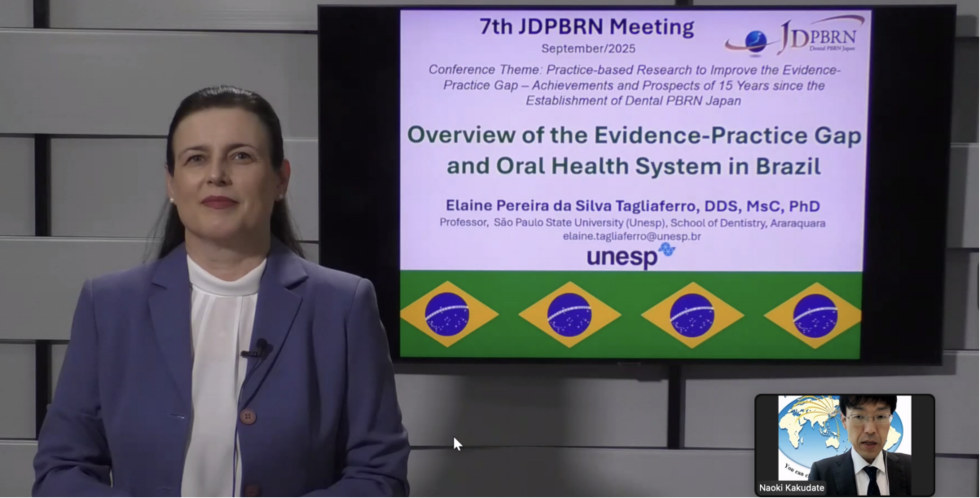
The third special video lecture was given by Dr. Elaine Pereira da Silva Tagliaferro, Professor at the School of Dentistry at São Paulo State University (Unesp), Araraquara. She joined the meeting for the first time and delivered a lecture titled “Overview of the Evidence-Practice Gap and Oral Health System in Brazil.” In the lecture, Dr. Tagliaferro shared research findings on the EPG in Brazilian dental practice, derived from international collaboration with the U.S., as well as outcomes from collaborative study with Japan aimed at developing strategies to improve the EPG. Dr. Tagliaferro also provided an overview of Brazil’s oral health system and its challenges and perspectives.
The fourth special lecture was given by Dr. Naoki Kakudate, Director of JDPBRN and Professor at Kyushu Dental University. In his lecture, titled “Achievements and Prospects of 15 Years since the Establishment of Dental PBRN Japan,” Dr. Kakudate presented key outcomes from 15 years of JDPBRN research activity, including international collaborative studies with the U.S., original studies conducted by JDPBRN, and a recent collaborative study with Brazil. Dr. Kakudate also introduced a new research initiative focusing on educational interventions in evidence-based dentistry and an international comparative study aimed at addressing clinical questions raised by dental practitioners.
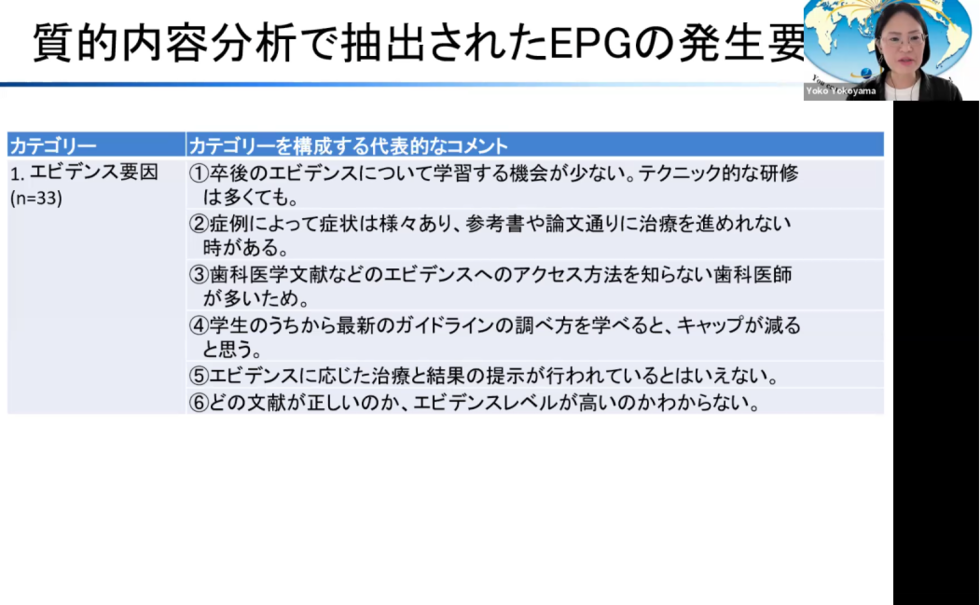
Following the special lectures, feedback was provided to participants regarding the results of two international collaborative studies—Study III: International comparison of the EPG and an educational intervention aimed at improving the gap, and Study IV: An international comparative study for clarifying the mechanism of the EPG and planning improvement strategies. Acknowledgments were also extended to the many dental practitioners who generously contributed to the implementation of these studies. The meeting concluded with a lively exchange of ideas among participants.
Despite the time differences, we are deeply grateful to the distinguished speakers who joined us from overseas, as well as to all the participants from across Japan. On behalf of the steering
committee, we extend our heartfelt appreciation.